


Lab-grown diamonds have established themselves as one of the most popular choices for engagement rings and fine jewelry in 2025. More and more couples are considering them as an ethical, affordable, and visually indistinguishable alternative to natural diamonds. However, doubts, myths, and objections still generate debate. In this definitive guide, you'll find clear, up-to-date, and honest answers so you can make your decision with confidence.
What is a laboratory diamond?
A lab-grown diamond is a real diamond , created under controlled conditions that replicate the natural formation process. Its chemical composition and crystal structure are identical to those of a natural diamond: pure carbon in a crystal lattice. Therefore, it cannot be distinguished with the naked eye , neither in brilliance, hardness, nor durability.
The only difference is their origin : while natural stone is extracted from the earth, laboratory-grown stone is produced in advanced technological facilities. This allows for high-quality stones with fewer imperfections and at a much more affordable price.
Short story
Lab-grown diamonds have been around since the mid-20th century , when they were first developed for industrial purposes. For decades, they were used in cutting tools and electronics due to their extreme hardness. With the advancement of technology, gemological grades suitable for jewelry began to be produced in the 2000s, and in the last decade, they have become popular for their beauty, traceability, and accessibility . Today, leading laboratories such as GIA and IGI issue reports certifying their characteristics in a standardized manner.
How laboratory diamonds are created
Both methods start with a diamond "seed" on which carbon crystallizes to form the gem. The result is a real diamond (pure carbon in a crystalline lattice), with the same optical and physical properties as a natural diamond; what changes is the origin and growth path .
HPHT (High Pressure, High Temperature)
- Process: an environment similar to that of the Earth's mantle is reproduced: very high pressure and temperature cause the carbon to crystallize on the seed.
- Typical features: microscopic metallic inclusions of the flux and slight color nuances (yellowish or bluish) due to traces such as nitrogen or boron may appear.
- Advantages: rapid growth and very resistant crystals. It is also commonly used to treat color in diamonds (natural or CVD) and improve their appearance.
CVD (Chemical Vapor Deposition)
- Process: In a vacuum chamber with carbon-rich gases (e.g., methane), a plasma causes carbon atoms to deposit layer by layer onto the seed.
- Typical features: high purity and color control. After growth, post-growth HPHT treatment is often used to refine the color.
- Advantages: high control over size and proportions; highly suitable for obtaining colorless stones with excellent cut.
HPHT vs. CVD: How It Affects Your Choice
- Visible quality: In jewelry, it's the cut (luster), color , and purity that are decisive, not the method. A well-cut CVD and a well-cut HPHT will look equally spectacular.
- Certification: prioritizes GIA , IGI or HRD reports with verifiable number and laser engraving.
- Transparency: Request that the method (HPHT or CVD) and any post-growth treatments be indicated; this is a good traceability practice.
Why it raises doubts
Although laboratory diamonds are chemically identical to natural diamonds, questions and fears such as:
- “Is it the same as a natural one or can you tell the difference?”
- “Does it lose value over time or is it a worse investment?”
- “Can it be scratched or damaged sooner than a natural one?”
- “How long does the shine of a lab diamond last?”
- “Are they really certified by GIA, IGI or HRD, or are there fake certificates?”
- “Will my partner see the lab-grown diamond as less special?”
These doubts are legitimate, but it's important to separate them from myths and focus on scientific reality and the experience of those who already use them.
Shine, hardness and durability
In terms of brilliance and hardness, there's no difference between a natural diamond and a laboratory-grown one. Both reach 10 on the Mohs scale, the maximum known hardness, which means they won't scratch with daily use . Brilliance depends on the cut and quality of the stone, not its origin. Both are susceptible to cracking or breaking if struck hard at certain angles.
Price and accessibility
A lab-grown diamond can cost between 30% and 70% less than its natural counterpart. This difference is not due to quality, but to the lack of mining and its rarity. As a result, many couples opt for larger carats or custom designs that would be unaffordable with a natural diamond.
Certificates: what you need to know
Quality lab-grown diamonds always come with an official certificate from recognized organizations such as GIA , IGI , or HRD. These documents guarantee authenticity and detail their characteristics (color, clarity, cut, and carat weight).
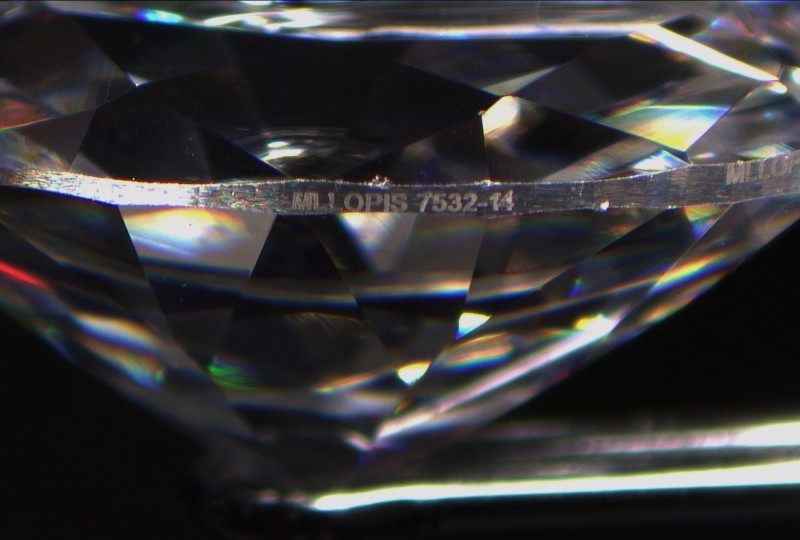
It's important to be cautious about counterfeit certificates on the market. At BRAVORA, we only work with accredited laboratories and never with unrecognized certificates . Every diamond we deliver includes a verifiable certification number and our own Certificate of Authenticity. This number can be seen on the diamond's girdle if it's not in a beveled setting.
Social and emotional perception
One of the most common objections is the "prestige" associated with natural diamonds. Some think that a lab-grown diamond may be perceived as less exclusive. However, in 2025, the conversation has changed:
- International luxury brands have begun offering laboratory diamonds.
- Social media is buzzing about “guilt-free luxury” and “accessible diamonds for everyone.”
- Transparency of origin is valued as a plus: it is a diamond, but with clear traceability .
In the end, what matters isn't what others think, but what it means for your personal story. More and more couples are choosing lab-grown diamonds precisely because they reflect values of responsibility, modernity, and conscience .
Do they lose value over time?
The resale value of lab-grown diamonds is very low compared to natural diamonds. However, most people don't buy an engagement ring with the intention of selling it , but rather for its symbolic and emotional value . What they do offer is the possibility of having a larger, higher-quality stone within the same budget, without compromising durability.
Moissanite vs lab diamond
Another common comparison is with moissanite . While both are ethical and affordable alternatives, the key difference is that moissanite is not a diamond, but silicon carbide. Moissanite sparkles with colorful flashes ("rainbow fire"), while lab-grown diamonds have a whiter, more balanced brilliance.
The choice depends on your priorities: if you're looking for a stone identical to a natural diamond, a lab-grown diamond is the way to go. If you prefer more sparkle and lower cost, moissanite may be ideal.
Conclusion: the diamond of the present
Lab-grown diamonds are no longer a fad: they represent a revolution in the world of jewelry. With the same beauty, hardness, and durability as natural diamonds, and at a more affordable price, they have become the smart and conscious choice for new generations. The choice is not between "real" and "fake," but between tradition and the future.
Frequently Asked Questions
Is a laboratory diamond the same as a natural one?
Yes. They are both real diamonds with the same composition and physical properties. The only difference is their origin.
Does a lab-grown diamond lose value?
Its resale value is low, but it doesn't lose its shine or durability. Most customers choose it for its emotional and aesthetic value , not as a financial investment.
Are they really certified?
Quality lab-grown diamonds are certified by GIA, IGI, or HRD . At BRAVORA, we always provide authentic and verifiable certificates.
Will my partner notice?
No. No one can distinguish a natural diamond from a laboratory-grown one with the naked eye. The brilliance and durability are identical.
Does it scratch or spoil faster?
No. Both reach 10 on the Mohs scale, which means they are the hardest stone in existence.
0 comments